Solitaire 3D Fish
PlaydayyCard
4.612.60K Reviews
- Version
- 1.0.127
- Installs
- 10.00M
- Age Rating
- Everyone
Screenshots
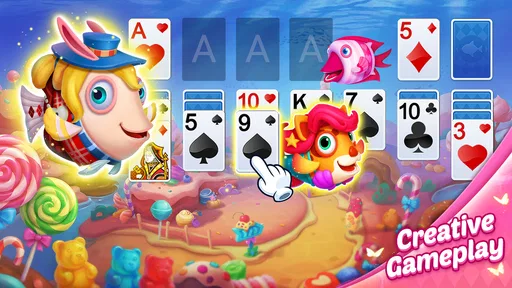
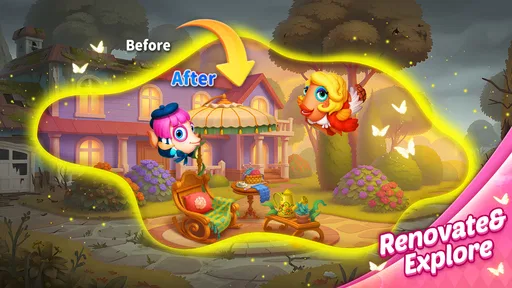
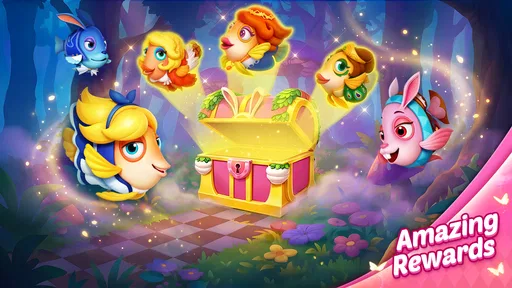
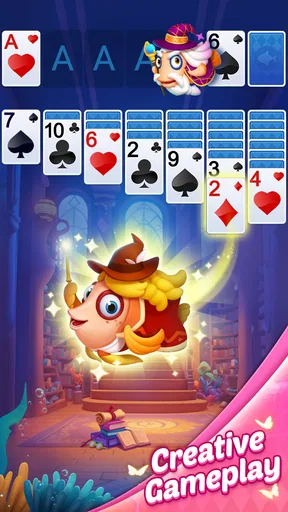

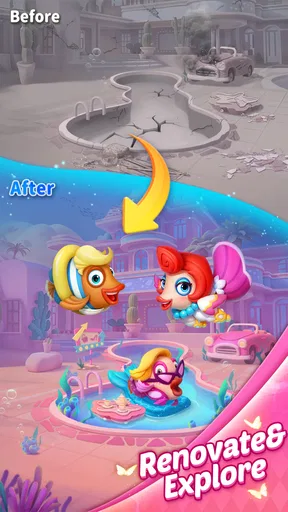

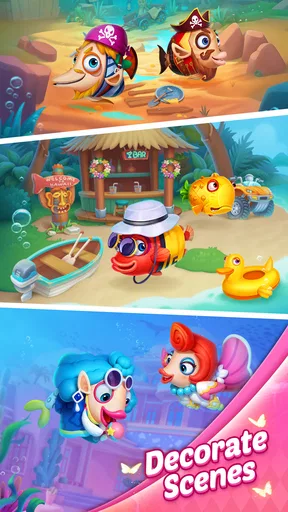
Our Review of Solitaire 3D Fish
 Analysis by Appyee
I found Solitaire 3D Fish easiest to understand when I treated it as a quiet, low-pressure card game rather than a deep strategy title. It takes the familiar patience format and places it in a colorful underwater setting, giving short breaks a little more personality than a plain digital deck. I can open it when I have a few minutes, play at my own pace, and stop without feeling that I have abandoned a complicated campaign.
That simplicity is the main reason I would recommend it to someone who already enjoys solitaire on a phone. The game is free to start, rated Everyone, and made by Playdayy. It has reached over ten million installs and holds an average rating of 4.6 from roughly 745 thousand ratings, so it is clearly not an obscure experiment. Still, popularity does not make it perfect. The underwater presentation and progression can be appealing, but players who want completely traditional solitaire, no distractions, or a purely offline-feeling experience may prefer a more stripped-back alternative.
How it works in a shared household
On a shared tablet or a phone that regularly moves between people at home, this game fits a particular kind of use: one person can take a short turn, hand the device over, and another person can begin a separate session when appropriate. I like that card games naturally support this stop-and-start rhythm. There is no need for everyone to sit down together, and nobody has to remember a long story or a complicated control scheme before playing.
A realistic example would be a quiet evening when one adult is waiting for dinner to finish, a teenager wants something calmer than a competitive multiplayer game, and another family member later uses the same device for a few rounds. Each player can approach the game as a personal time-filler. The important practical point is to agree on whose progress is being used before tapping through rewards or spending anything. On a shared device, the game itself does not replace a household agreement about turns and purchases.
The underwater theme also makes it more approachable for people who find a bare card table dull. Fish and aquarium-style visual elements give the familiar solitaire structure a sense of place, which can make repeated rounds feel less stark. I would not call the decoration the main attraction, but it helps the game feel more like a casual pastime than a utility.
For a household that wants a game everyone can play together at the same moment, this is not the obvious choice. Solitaire is fundamentally turn-independent and usually solitary. It works well when people are sharing a device at different times, not when they are looking for team play, conversation, or a common competitive scoreboard. A board game app or a multiplayer card title would be better for that purpose.
What to settle before handing over the device
My first recommendation is to decide whether the device is being used by one regular player or several occasional players. A single player gets the cleanest sense of progress, because visual changes and accumulated rewards remain connected to one person’s routine. With several users, the experience becomes more informal: each person can enjoy the cards, but progress may not feel personally owned unless the household keeps track of turns.
I would also establish a simple rule for in-app purchases before anyone starts. The game is free to download, but individual purchases range from $0.99 to $109.99. That is a wide enough range that a child or a guest should not be left to guess what a button means. On a shared device, the safest habit is to require the device owner’s approval for every purchase and to avoid handing over a device while an account is already ready to confirm payment.
This is not a criticism unique to this title; it is a practical issue with many free mobile games. What matters here is that the relaxed, colorful presentation can make the game feel harmless enough for someone to tap quickly. I would slow down around any offer, currency, bundle, or reward prompt. If I were setting it up for a household, I would explain that free access does not mean every optional item is free.
Another useful boundary is time. Solitaire is easy to extend because one round naturally leads into another, especially when the game presents a new visual goal or a small sense of completion. I find it better to decide in advance whether the session is for one round, a short waiting period, or a longer personal break. That keeps the game in its proper role as a relaxing activity instead of letting it quietly take over an evening.
Keeping progress and expectations clear
Shared-device use becomes awkward when one person assumes that a change belongs to them and another person later continues from the same place. I would avoid presenting the game as a family progression unless everyone understands that the visible state may represent whoever played last. A small note in the household routine—“this is Alex’s turn” or “start a fresh session after handing it back”—can prevent more frustration than any technical workaround.
I would not ask the game to solve account boundaries that the household has not defined. The useful boundary is behavioral: each player knows when they are using the device, what they may tap, and whether they are allowed to make purchases. That approach is especially important when the same phone contains several people’s personal accounts or payment methods.
For adults sharing a tablet, this may be easy. For younger players, I would make the rule more explicit and stay nearby during the first few sessions. The Everyone rating makes the game suitable for a broad audience in terms of content, but an age rating is not the same thing as permission to use a payment-enabled device without supervision. I see the game as child-friendly in tone, while still treating spending and shared progress as adult responsibilities.
Why the card format remains satisfying
The basic appeal is familiar: arranging cards, spotting a useful move, and clearing a layout gives the brain a small, understandable task. I enjoy that it asks for attention without demanding the energy of a fast action game. It is a good companion for a commute wait, a coffee break, or the final few minutes before sleep, provided the bright presentation is not too stimulating for your routine.
The best way to play, in my experience, is to treat each hand as a short exercise in observation rather than rushing to clear cards. Before making an obvious move, I scan for blocked cards and consider which action will reveal the most information. That habit is more valuable than tapping quickly, because a careless early choice can leave the layout less flexible. The game is casual, but the small decisions still reward patience.
A second useful approach is to use it as a reset between demanding tasks. Instead of opening a social feed and getting pulled into unrelated content, I can play a few hands with a clear beginning and end. The card structure gives my attention somewhere specific to go. This will not work for everyone—some players find any repeatable puzzle habit hard to stop—but for me the defined rules make the break feel more contained.
The underwater layer changes the emotional tone without changing what solitaire is. If you already love classic cards, you may appreciate the extra atmosphere, or you may see it as visual clutter around a game you would rather keep plain. That difference is central to choosing it. I would pick this version for charm and variety, not because it reinvents the card genre.
Where it differs from a traditional solitaire app
A conventional solitaire app usually focuses on the deck, the layout, and perhaps a few settings. Solitaire 3D Fish is more decorative and game-like, so it feels less like a digital replacement for a physical pack of cards. That can make repeated play more inviting, especially for someone who needs a little visual motivation to return.
The trade-off is that the surrounding presentation may not suit players who want the shortest route from opening the app to dealing a hand. If your ideal solitaire experience is a clean green table, minimal animation, and nothing competing for attention, a classic solitaire app is probably the better match. I would also choose that kind of alternative for someone who wants the card mechanics to remain the entire point.
Compared with a competitive card game, this title is gentler and more private. There is no need to coordinate a time with another player, explain a strategy to a teammate, or worry about an opponent’s pace. That makes it useful for mixed-age households where people want to share a device but not necessarily play against one another. The downside is that it offers less social energy and less reason to celebrate a win together.
Compared with a puzzle game built around new rules every few minutes, the appeal here is consistency. I know roughly what kind of concentration I am getting. Players who need constant novelty may eventually find the solitaire foundation repetitive, even with the aquarium setting. In that case, rotating it with a word game, logic puzzle, or multiplayer title makes more sense than expecting this one format to provide every kind of entertainment.
Practical details before installing
The game is free, with optional purchases priced individually from $0.99 to $109.99. I would install it for the free card experience first and decide later whether any optional extras genuinely improve my routine. There is no reason to spend simply because the game presents an offer. If the basic rounds already provide the relaxation I want, keeping the experience free is a perfectly sensible choice.
It supports devices running Android 6.0 or later, which makes it accessible on a broad range of Android hardware. The current version is 1.0.127. On an older phone, I would pay attention to how comfortable the cards are to read and whether the visual effects feel smooth enough for long sessions. A game can technically run on a device while still feeling cramped or tiring on a smaller screen.
The game was released on January 29, 2021, and its continued presence suggests that it has had time to establish a substantial audience. Playdayy has positioned it as a casual card experience rather than a demanding competitive product. That context helps set expectations: I would not install it looking for a story-driven adventure, a serious tournament system, or a replacement for a physical family card night.
Because it is rated Everyone, I can imagine it working across a household with different ages, but I would still introduce it differently to each person. An adult may immediately understand the solitaire rhythm. A younger player may focus first on the fish and visual rewards, so I would explain the card goal and the purchase rule before letting them explore independently.
Small habits that make the experience better
One habit I found useful is separating “relaxation rounds” from “challenge rounds” in my own mind. When I am tired, I play slowly and accept that the point is to unwind. When I want more engagement, I examine the layout before committing to moves and try to improve my decisions. This prevents me from judging the game unfairly when I am using it for two different purposes.
I also recommend stopping after a satisfying finish instead of automatically chasing the next reward. The underwater theme can encourage the feeling that there is always another small improvement to make. That loop is enjoyable in moderation, but it is less relaxing when I keep playing only because I am waiting for the next unlock or visual change.
For shared use, I would keep a simple verbal handoff: say whether the current round is yours, whether the next person may start a new one, and whether any offer should be ignored. This sounds obvious, but it is especially helpful when a child, visitor, or partner is using the device casually. Clear coordination protects both personal progress and the household budget.
Finally, I would judge the game by the quality of its ordinary five-minute sessions, not by how much content I can accumulate. Its strength is that it can fill a small gap with a recognizable activity. If I need a rich long-term system, I would look elsewhere. If I need a calm card game that adds a playful underwater identity to solitaire, it makes a convincing case.
Who should choose it, and who should skip it?
I think it is a strong fit for people who like solitaire but want more color and atmosphere than a plain card table provides. It also suits adults sharing a device with family members when the goal is separate, casual play rather than simultaneous competition. The simple rules make it approachable, while the visual setting gives younger players a reason to pay attention to a format they might otherwise ignore.
I would be more cautious about recommending it to someone who dislikes in-app purchase prompts, wants an entirely minimal interface, or has a strict preference for traditional solitaire presentation. The free entry is helpful, but the optional price range means household purchase boundaries matter. Players who are easily drawn into “one more round” loops should also use a session limit.
It is not the right choice for a family seeking built-in cooperation, a child-focused environment that removes the need for adult oversight, or a serious card player looking for tournament-level depth. In those cases, a multiplayer card app, a supervised offline game, or a more traditional solitaire program would better match the need.
After using it as a casual card break, I see Solitaire 3D Fish as a pleasant middle ground between a plain solitaire utility and a more elaborate mobile game. Its strongest qualities are the approachable format, the underwater personality, and the ability to fit naturally into short, separate turns on a shared device. Its weaknesses are equally practical: repeated solitaire can become familiar, decorative progression may not appeal to purists, and optional purchases require clear household rules.
My household verdict is simple: I would keep it available for adults and older children who understand the difference between playing and buying, with one person responsible for payment approval. I would use it for quiet individual breaks, not as the main family activity. If that sounds like your situation, the free download makes it easy to try without commitment. Just begin with sensible boundaries, and let the cards—not the purchase prompts or the promise of another round—decide how long you stay.
Verdict
Strengths of Solitaire 3D Fish
- Relaxing solitaire gameplay with a colorful underwater theme.
- Large variety of fish and aquarium decorations to unlock.,3D visuals make the aquarium feel lively and engaging.
- Simple controls are suitable for both beginners and casual players.
- Offline play is useful when you have no internet connection.
Limitations of Solitaire 3D Fish
- Frequent ads can interrupt gameplay, especially between levels.
- Some rewards and features may require watching ads or spending money.
- Progression can feel slow without using boosters or premium items.
- The game may consume noticeable battery during longer sessions.
- Limited strategic depth may make the gameplay repetitive over time.
Other Releases by Playdayy
View All
Food Sort: Puzzle Game
Puzzle4.6

Goods Rush! 3D Sort Puzzle
Puzzle4.7
Similar Picks in This Category
View All
Solitaire - Classic Card Games
MobilityWare4.6

UNO!™
Mattel163 Limited4.3

Spider Solitaire: Card Games
MobilityWare4.6

Solitaire.com - Classic Cards
Tripledot Studios Limited4.7

Plants vs. Zombies™ Heroes
ELECTRONIC ARTS4.1

Hearthstone
Blizzard Entertainment, Inc.4.1
Frequently Asked Questions
What is Solitaire 3D Fish?
Solitaire 3D Fish is a casual card game that combines classic solitaire gameplay with an underwater aquarium theme. You can play familiar solitaire-style levels while collecting fish, decorating tanks, and creating a colorful virtual ocean environment. The game is designed for short sessions, making it suitable for relaxing play on Android and iOS devices.
How does the gameplay work in Solitaire 3D Fish?
The main gameplay is based on arranging cards according to classic solitaire rules, usually by building sequences and clearing the playing field. Completing levels can reward you with coins, decorations, or other items used to improve your aquarium. As you progress, new fish and underwater environments may become available, adding a collection and customization element to the traditional card experience.
Is Solitaire 3D Fish free to download and play?
Solitaire 3D Fish can generally be downloaded and played without an upfront purchase, but it may include optional in-app purchases. These purchases can provide extra coins, boosters, special items, or faster progress. The game may also display advertisements, particularly between levels or when you request bonus rewards. Check your device’s store listing for the latest pricing and purchase details.
Can Solitaire 3D Fish be played offline?
Some solitaire levels may remain playable without an internet connection, which is useful when traveling or when you have limited access to Wi-Fi or mobile data. However, online access may be required for advertisements, cloud saving, events, updates, rewards, or certain social and promotional features. Offline availability can also vary after updates, so it is best to test the game before relying on it without connectivity.
Is Solitaire 3D Fish suitable for children and casual players?
Solitaire 3D Fish is generally easy to understand and suitable for casual players who enjoy card games, aquarium themes, and light progression systems. Nevertheless, parents should review the age rating and store information because the app may contain advertisements and optional in-app purchases. If children use the game, enabling parental controls and restricting purchases can help prevent accidental transactions.
Play our best games!


